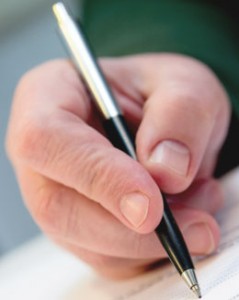
Size in handwriting

What does the size of handwriting tell us?

It is literally the size of our thoughts, our confidence, our behavior. People who really think big write big.

When I say think big, I’m speaking about the entire concept of life, financial, social, artistic, philosophical and everything else. I am talking about wide interests, gregarious living and expansive adventure, where thoughts and behavior are not limited to any one path of life.

People who write small and very small think they are just as expansive and have just as much fun as the rest of the world. You see they, like everyone else judge themselves normal and are inclined to think behavior and attitudes of more confident people are verging on both abnormal and offensive. They are concentrated and generally caucious and conservative in their thoughts and behavior and they judge those big brainy writers as showoffs.

The normal handwriting size is naturally the happy medium and the great masses of writers are in this catagory. They are usually lawful, conventional, balanced in all of life expression.

Small writers are convinced that their concentrated somewhat peep hole view point of life is all there is to it. They are generally focused on the mechanics and details of life around them reveling in their efficiency and rarely aware of how much life is passing them by. They are the scientists, the dedicated musicians, the bookkeepers. Totally absorbed in their work. The meticulous artist or the engineers, so focused and concentrated in his profession. Often times they lose all interest in the normal, social obligations.

Small script is a psychological picture of concentrated thought and behavior. It is the indication of the specialist, the individual who literally ignores much as he or she focusses on what’s important to them whether it be their hobby or their profession. They will master it taking great pride in the detailed efficiency or precision. Most of them tend to be perfectionists, giving great attention to the finest of detail sometimes so involved in detail they either ignore or lose sight of greater objectives.

Size judgement to be most accurate must pay particular attention to the middle zone, in other words the size of the vowels such as the “a”,”e”,”i”,”o”,”u” then along with that you would judge those middle loops like those in the “d” or “g”. Oh yes those extensions into the other zones can altar conclusions somewhat, but not as much as you would think.They are primarily directional guidelines of interest structure.

The real measure or attitude of life is to be found right there in the middle zone or central area of the script. Naturally he is not aware of this and naturally he thinks everyone looks and thinks about not life as much as he does. But that doesn’t mean that the small or very small writers cannot become famous or do great things. He or she may be a potential Einstein, dubiously working towards great goals. But what I do mean is that when so concentrated they totally become unaware of much of rest of life, their attitudes, interest and viewpoints are concentrated or focused on primary objectives locking out and ignoring most if not all of the rest of it.

The size of peoples handwriting represents the size of the thought, expression and behavior. Wide interest, social activity and bold behavior require large viewpoints. Therefore they require large, bold and expressive letter formations.

It is if they are unconsciously saying I got a lot of things going for me. Do you see how big my interests are? They are spread all over just like my letter formations.

I also use the word boldness in relation to size for the simple reason that boldness is directly related to size and clarity.

People who write with unrecognizable letter forms so pinched they difficult to make out are really unconsciously admitting they are a little afraid of being to well understood.

It can represent either dishonesty or fear, but in either case they are not boldly laying things on the line and those very small writers are unconsciously saying I’ve got to hold this down, or be a little careful. I don’t want everyone to know what i’m thinking.

As we examine that great bulk of writers called medium to medium large we are looking at the majority of people. Most of them have been in the habit of lawfully doing what they have been told since birth and their writing shows only slight different formations from those they learned in grade school.

These are the law abiding, stay out of trouble peoplee. Most of them are primarily concerned about raising a family, focusing on their obligations and being good citizens, unless they are vertical or left slant, and are the other 75-80% social participants in group activities.

They try to maintain many interests, but limit themselves most of the time to what are conservative, and acceptable interests and activities. A great many writers who qualify as medium with stress in the middle zone will admit that their greatest interests are making a living, getting an education, having a house and car, wife and children.

As a group they try to avoid the extremes of thought and behavior exactly like they avoid the extremes of sizing their script. Conventional script is a norm, even though some will create artistic flourishes or unusual signature as their symbol of individuality. But you can bet that in most things moderation best represents their attitudes, interests, and behavior.

Those who write in the medium large category are expressing the increasing confidence often times generated by maturity or some times business and social success. Check their handwriting against it as students. In most cases it will be a gradually enlarging script, expanding with the growth of confidence.

So often you will find the so called self made man will write with both size and exaggerated signatures loudly proclaiming his higher achievement and self-belief. Here is something you should remember. Experiences will teach you that people who frequently or generally write medium large or large are capable of and frequently do write small. This will depend upon such things as duality of purpose, and such things as the salesman that must be his own accountant. For instance filling in ledger sheets and business forms is one way in which the medium or large writer is forced to write small. As when writing on a postcard or a note pad in such cases you can not make conclusive about script size.

When judging size you must bare in mind this question do they have plenty of room to write? If so make a judgment. If size is limited you cannot properly and accurately judge the size .

People who write medium large to large are much easier to understand than the medium and the small. They are usually more open and honest and uninhibited, living somewhat on the basis of ready or not here I come, like the old game we use to play.

This is a important point to remember in both social life and business life. Openness of expression and confident behavior leave little doubt or confusion as to peoples thoughts or intentions. Psychologically medium large to large writers get along better with others, live more confidently than any of the medium or small writers.

This is a difficult fact to convince those small writers of, But it is nonetheless, a fact. Also they have fewer marital troubles, consultant phychiatrists less frequently, and rarly are deeply depressed or suicidal.

The exceptions of these statements would probably be found in the left slanting tilt and not many writers with large writing write with a left slant. So what does all this mean? Simply the truth of our original statement about size. If you think big, write with boldness, your life is less complicated, less fearful and inhibited. You’ll express with greater confidence, act with greater confidence, and because of these things you will enjoy more things in life. More fear is never a constructive factor. Confidence is it’s opposite! If you write with it, it becomes your life. Know as we begin, consideration of what classifies large handwriting. Like some things guard against. Over large or exaggerated script can be a signal of extremes of behavior such as egomania, gross exaggeration, and less unconventional or exceptable behavior. They generally refused to be tied down to very little, anything, or anybody. They are capable of great enthusiasm but often guilty of too easy lost of interest. Those with very graceful, large writing especially if some of it is ornate, actually have feelings of granddur. Such a writer may almost think of themselves of royalty. If very vertical and large they will certain classify as snobbish.

In every case a very large writer is aggressive . That bold thought and behavior hates resistance and they just don’t believe in obstacles. If the large writing is large and angular, it indicates great determination. If it is large and loopy, it indicates a desire to be noticed. They love self discussion and approval and they will not settle just little of it, they prefer it worldwide.

Some writers of all size categories, their words start out fairly large in size and then begin tappering down in size. This means in the beginning they were willing to level with everyone but along the line caution or deplomacy got in there and altered the size. In fact tappering script is one positive side of diplomacy. On the other hand people who begin small an gradually enlarge their writing are admitting to a particular weakness. They cannot keep a secret.

When you see constant variations of letter size in a script you are looking at instability and mental confusion, especially if it is tangled. It is a positive negative factor or I should say it is positively negative. Especially when it occurs throughout the script repeated many times. If each extremes size variations occur in a signal word, it is bad. You hardly classify the size. In fact the character is completely unstable.

People who do considerable work in bookkeeping and accounting and similar fields are required by the nature of there work to write small. As a consequence they either fit the small writers description, or they learn to write both small in there work but medium the rest of the time. If the latter is the case they are usually not to happy with there work and will be wanting to change professions.

Generally small and very small writers are capable of great concentration that dictates facts and figures. They produce meticulous work in whatever occupation he or she works in. They are not usually aggressive in behavior or manners, preferring to work behind the scenes, in most cases out of the limelight. Some of them are capable of great determination but most of them repress there enthusiasm . Those who write small but with very clear script with minisculy small capitals are unpretentious, inclined to be modest, but honest in expression. If those capitals are overly small barely peeking about the rest of the script they are over moderate and and lack self confidence.

The larger capitals, the more confidence is expressed with every size of script. You’ll be studying that later as you study capitals, but keep it in mind from here on that the size of the capital expresses the size of the confidence in work, and ideas. When you see large flourishes and extensions but tense or very small middle zone letter forms you are looking at the personality who condense with gregarious boldness an honesty but who is really not all that confident an is holding things back or covering up.

Very large handwriting usually represents greater generosity especially if letter forms are wide spread. If the letters are very close together, especially with very small writing, it is a positive indication of thrift. It is an absolute judgement if they write little or no space left on the page.

People who write big, are aggressive and ambitious. They think big and are seldom inclined to settle for less than a big return.

Judging the size in handwriting is simply judging the size in nearly every phase of expression of the writers character and personality. \Shyness and concentration are more personified by the nearly microscopic tiny writing while exactly the opposite is true with larger size.

The medium size script believes in letting go occasionally but the attitude is “I better hold things down,” while a large script is writing with the attitude “who cares, this is me”.

In graphotherapy instructions I always advise correcting two things, enlarging very small or small script and changes in left slant writing to a vertical or a slight right slant. If either of these factors apply to you I would advise you to make that change in your life now. Why? Simply because it will give you greater enjoyment in life and what better reason can you find in that?

Slant in handwriting

The tilt or slant is often called the emotional quotient. It is the measure of emotions and expression.

Individual expression begins at the extreme left tilt representing the inhibiting self-repression and the extent to the extreme right tilt of unstable emotionalism, and impulsive irresponsibility. Right tilt follows the natural movement of communication from self to life. The degree establishes the desire or reach towards life for understanding and approval. The vertical tilt should be considered the posture of self, free of emotion. Mind rules from the vertical position.

The further right tilts the more emotional, and passionate the behavior, and the less intellectual or mind controlled expression. Left of vertical indicates introversion, caution and repression. The degree leftward is the measure of inhibition and unconscious fear of life. Heart, emotion and passion dominate the strong right slants. Fear, suspicion, inhibition are shown by the left slant.

Very emotional people will defend their emotionalism on the erroneous assumption that it is measure of love. Actually, nothing is further from the truth. The degree of tilt establishes a desire or reach towards life or approval. Does this mean the person who writes vertical does not desire approval? No, not really. Everyone likes approval but to some, it is a desperate need. The vertical writer is not involved emotionally in what you or I say or think. He is intellectually weighing and considering it. He likes praise but if it is not there, it will not bother him much. This mind rules attitude has much to be said for it, yet he must face the consequences of strictly intellectual involvement with others. It seems to be totally lacking in warmth and feeling for the people around him, in spite of the fact that the warmth and feeling may be there but it is controlled and therefore unexpressed. How can you spot this in a writer? His writing is vertical but also very loopy, both bold and tall loops. The feeling is there but it is restrained, and held back. The vertical writer has a strictly controlled intellectual approach to life. Those who write that way can be cold and unexpressive. Intellectual control can make life well regulated and well managed but it looses something in relationships such as a marriage partner or as a parent. The ability to express feeling or emotion can add much to the relationship. It is because of this that a slight right slant is the ideal mental approach. The feeling and reach are there. When those feelings and emotions are not given free range, they are generally under control, which is the ideal of mental posture.

Just because tilt is extreme does not necessarily mean the emotion is very great. It simply means the outward expression of what emotion there is – is extreme. Some people are very emotional or expressive of their feelings, but they can be very superficial or shallow feelings. You also need to see if the middle zone loops are very compressed or tied up in knots. If they are, it means tremendous emotional feeling is felt but much of it is held back or suppressed. Usually this is not true of the extreme right tilts. The emotional pressure in those cases is usually too much for anybody to contain. People who write like that are like a steam boiler with safety valves popping off constantly releasing dangerous pressures. They laugh too extreme, cry too extreme, literally tear themselves up mentally and physically with emotions they are permitting to run wild. Their heads, regardless of how good it is, seldom gets a chance to run things. Their feelings dominate their life and behavior and most of their lives are spent reacting emotionally rather than thoughtfully to life pressures and challenges.

Those extreme right tilts are following the natural movement of communication from self to life, but there is an apparent problem. The people who write with the extreme right slants have gone too extreme; therefore, their behavior will not be normal. They will over react to life until something or someone teaches them better. The truth is, a little emotion is natural and long well received, but excess of it not only tears people up physically but makes it impossible to have intelligent thought and behavior.

So, what about those tilts swinging back to left? These people are capable of love and emotion. They just have difficulty expressing it. Check the size of the loops to see if there is any feeling. Left tilt or left slant writers may talk to a lot. They frequently talk perhaps too much in an effort to hide their fear or insecurity. However, talking does not necessary mean they are saying what they think. Left slant writers, whether they chatter about inconsequential matters or have little to say, are afraid to come out into the open and speak their minds or express their feelings. They are convinced they would be rejected or unloved if they did. They are the people who usually have been dominated by aggressive or assertive parents and they learned long ago you can stay out of trouble by either keeping your mouth shut or saying something other then their real thoughts.

We all become the kind of person our habits of reacting to those around us have made us. It is an old story-do a thing often enough and it begins to become a standard part of your life and peoples handwriting truthfully exposes what those standards of reaction are.

Inhibition is quite often used to describe those left slants, which is just a fancy word for fear. Moreover, fear makes it either difficult or sometimes impossible for such writers to communicate well with their fellow man.

How important is communication? Communication is the very purpose for handwriting. It is also the foundation for all trust and understanding between people. People who write with a left tilt or backhand are showing their fear unconsciously to the graphologist. They can hardly believe their expression or communication is hampered by unconscious fear. They are more inclined to think, since they have always felt a little rather self-conscious, that everyone expresses their feelings that way. They will admit that they have difficulty being comfortable with strangers, or perhaps have trouble maintaining conversations with people they do not know well. But generally they are unaware they are inhibited, in spite of the fact that more expressive personalities complain they are unexpressive and cold or have to beg them for praise and words of admiration or approval. Learning more about graphology will teach you the meaning of the double and closed up tied loops. People who write with those back slanted or tilted letters with double and closed-up-tight loops are seldom saying what they are really thinking and feeling. As we consider these inhibitions, please remember to each of us, our thoughts, our reactions seem normal since ours are the only reaction. People only measure themselves by the comparison to others close around them. The variations and comparisons will tend to convince people that it is the others are abnormal.

Some writers have all kinds of slants or tilts in there so you must decide which one is dominate. What does it mean when the slant or tilt goes in all directions? It simply means that the writers’ behavior goes in all directions too. It is a positive sign of character and emotional instability. People who write like that are erratic, unpredictable, and undependable. They are often times literally confused in behavior. A few signs of varied tilt do not mean unstable and erratic. Everyone can show some of these indications at times. It is when all of the script is bouncing from one tilt to another, sometimes even within a single word. When the tilt changes from strong right to positive left, you have indications of extreme behavior. Many people with a right tilt have variations in their interest and enthusiasm and emotion and therefore reflect this in their handwriting.

Keep in mind that a written sample shows your feelings while you are in the act of writing it, and your dominant tendencies will show. If you are writing happy news, optimism will show or on the contrary, if you are writing sad news it too will show. Your handwriting constantly reflects changes to match your mood. If you tend to doubt this make it a point to write something the next time you are angry and then when you are cooled off compare it with your normal script.

It is a testimonial to the accuracy of handwriting analysis when people say; I never write two things alike. My handwriting keeps changing. The simple fact is that since handwriting is really brainwriting, it would have to be changing – as changeable as people are.

Keep in mind also that the smaller and more pinched or compressed the writing regardless of the tilt the more we must conclude that the emotion may be there but the desire to let it out is restricted or inhibited by caution, suspicion, or just plain fear. So make your tilt judgment always keeping in mind that size and clarity or open o’s and a’s and even double looping should or can modify conclusions about the tilt.

As an example some people may be extremely emotional, writing with an extreme right tilt and yet have all the signs indicating that they are seldom saying or expressing what they really are thinking. Others may write with the slight to medium left tilt and be completely honest when they communicate but literally dislike people and therefore only speak and write when absolutely necessary. So you see, that reticent left tilt can mean something other than fear. It can mean cold indifference.

The slant or tilt is a picture of our desire or lack of desire to share our thoughts and feelings. A vertical script is going to be better at self control than either tilt extreme, but certainly they will also be less than enthusiastic than the right tilt and also they will do better working alone, all other things equal. However, they will not mix and participate well with group activities. Vertical writers, writing in a small size with modest capitals will tend to hold back, will not take unnecessary risks, and will usually be conservative.

If their script is large it will increase their daring and social awareness and interest, unless there are other indications of carelessness, like absent eye dots, or poorly cross t-bars. Vertical writers, especially if the script is medium or small will be very efficient people. This is due to the non-involvement with emotion. They can be very cool, calm, and efficient. They generally do not do well when it comes to motivating others. It takes warmth or feeling to generate enthusiasm in others. Backhand or left slant writers are more cautious than others are, and inclined to be reticent in expression. They have difficulty generating warmth, praise, or enthusiasm. The slight to medium right slant writers like life and people, are sociable, they can bubble with enthusiasm, and give with praise. They are restless and on the go when in good health. Extreme left and extreme right tilts can be jointly classified in some negative areas since both are extremes of expressions. Both tilts would be classified with the following negative traits, lack of restraint, haste, lacks discipline, thoughtlessness, radicalism, and hysteria. These people need graphotheraphy and have probably never heard of it.

Size, angularity, and legibility, and many other factors can modify slant or tilt conclusions, but these are the basic implications. Naturally, you will want to redefine those judgments with all the evidence present and consider the total script picture. If you test the basics on friends and relatives, you will find that without the refined knowledge, these basics are surprisingly accurate in character evaluations.

EMPLOYMENT / PERSONNEL SELECTION

Graphology is a proven science for psychological evaluations and detecting vocational aptitudes.  It reveals major aspects of one’s personality, both strengths and weaknesses.   It has long been used in Europe, the Soviet Union, South America, the U.S., Israel and other countries as a hiring tool.  A full 85% of companies in Western Europe use them for this purpose.

Handwriting Analysis is not meant to replace other methods of prescreening tests and should not be used as the sole criteria for making a hiring decision.  Nevertheless, it does have definite advantages over interviews and regular psychological tests:

  • It is objective and nondiscriminatory because it cannot reveal age, sex, race, national origin or religion.
  • people can teach themselves how to do well on interviews and regular psychological tests.  In other words, what one says can be deceptive but how one writes cannot lie.  The candidate may in fact be completely unaware that he is undergoing a test while writing.
  •  adaptable to obstinate or reluctant candidates and can be administered out of town.
  •   No extra time required for administering tests.


The U.S. Supreme Court considers one’s handwriting to be a public behavior and therefore outside constitutional protection of privacy so it can be analyzed without one’s permission.  However, it is recommended that it be kept confidential and that the writer be told that his handwriting will be analyzed.